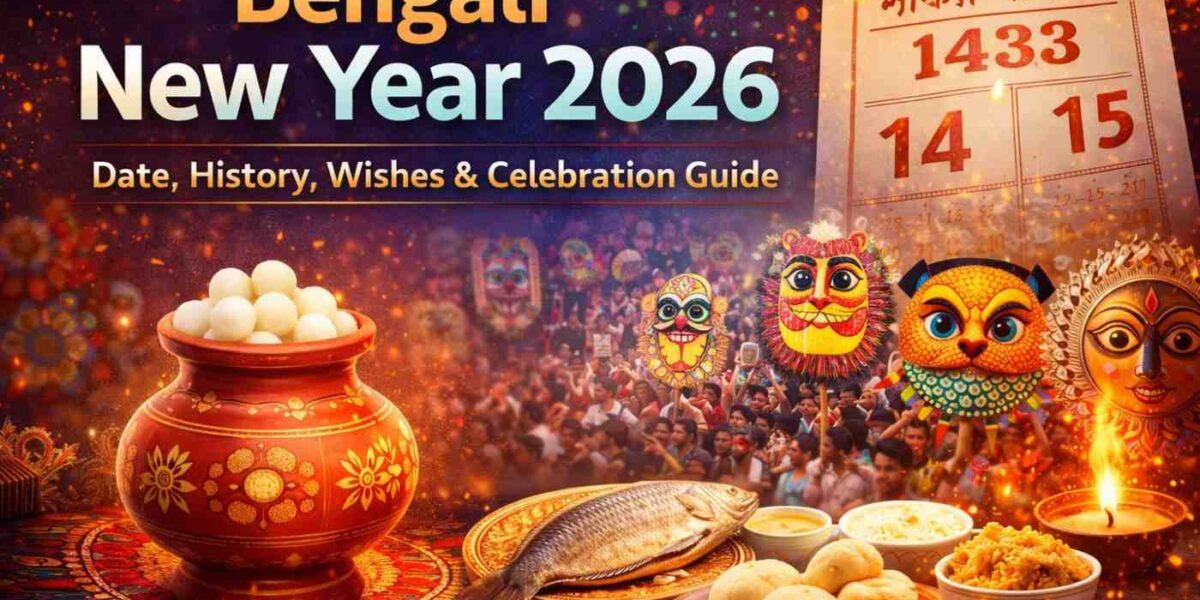
Bengali New Year 2026: If you’ve ever walked through the streets of Kolkata or Dhaka during mid-April, you know the air smells differently. It’s a mix of parched earth meeting the first “Kalbaisakhi” (nor’wester) rains, the sweet scent of freshly printed ledgers (Haal Khata), and the undeniable aroma of Kosha Mangsho wafting from kitchen windows.
Pohela Boishakh (or Poila Baisakh) is more than just a date on a calendar; it is the heartbeat of Bengali identity. Whether you are a local looking to refresh your traditions or someone curious about how to join the festivities in 2026, this guide is your roadmap to celebrating the dawn of the Bengali year 1433.
Bengali New Year 2026 The Essentials: Date and Timing for 2026
Mark your calendars. While the Gregorian New Year is fixed, the Bengali New Year follows a solar calendar that can slightly shift between the 14th and 15th of April.
-
West Bengal & India: Tuesday, April 14, 2025 (Mesha Sankranti) leads into the New Year on Wednesday, April 15, 2026.
-
Bangladesh: As per the revised national calendar, the celebration typically remains fixed on Tuesday, April 14, 2026.
Why the difference? In my experience explaining this to non-Bengali friends, it often causes confusion. Bangladesh follows a modified version of the calendar to keep dates more consistent with the Gregorian system, whereas in West Bengal, many still follow the Panjika (traditional almanac) based on the sun’s entry into the Aries sign (Mesha Sankranti).
Read This Also: Pohela Boishakh 2026: 10 Unique Wishes You Must Send
A Quick Dive into History: Why do we celebrate?
The origins of the Bengali calendar (Bangabda) are a fascinating blend of agriculture and administration.
Most historians point toward the Mughal Emperor Akbar. Back in the 16th century, the Islamic lunar calendar made it difficult for farmers to pay taxes because the harvest cycle didn’t match the calendar. Akbar tasked his royal astronomer, Fathullah Shirazi, to create a new calendar that combined the Islamic lunar system with the Hindu solar calendar.
The result? The Bengali year was born, starting with the harvest season. For centuries, this day has marked the “Haal Khata”—the opening of new accounting books. Even today, if you visit a traditional shop in Gariahat or Esplanade on Poila Baisakh, you’ll see businessmen performing puja for their new red-covered ledgers.
The Celebration Guide: How to Celebrate Like a Local
If you’re planning your day, don’t just treat it like another holiday. Here is the “unwritten” routine most Bengali families follow.
1. The Morning Ritual
The day starts early. We wear new clothes—traditionally a Gorod or Jamdani saree for women and a Panjabi (kurta) for men. White and red are the auspicious colors of the day, symbolizing purity and new beginnings.
2. The Cultural Procession
In Bangladesh, the Mangal Shobhajatra (organized by Dhaka University’s Fine Arts students) is a UNESCO-recognized heritage event. It’s a vibrant, colorful parade with giant masks and floats. In West Bengal, you’ll find Prabhat Pheris (morning processions) where people sing Rabindra Sangeet, specifically the iconic “Esho hey Boishakh”.
3. The Feast (The Non-Negotiable Part)
You cannot celebrate Poila Baisakh on a diet. It’s practically illegal in a Bengali household.
Real-Life Mistakes to Avoid
From years of observing (and making) these mistakes, here’s what you should look out for:
-
Mistake: Ignoring the Weather. April in Bengal is brutally hot and humid.
-
Fix: If you are attending a parade, carry an umbrella and stay hydrated with Ghorer Shorbot (homemade lime juice).
-
-
Mistake: Waiting until the last minute for restaurant reservations.
-
Fix: Iconic places like 6 Ballygunge Place or Oh! Calcutta get booked weeks in advance. If you haven’t booked, opt for a home-cooked meal or explore local “Pice Hotels” which offer a more authentic, albeit rustic, experience.
-
-
Mistake: Shopping on the actual day. * Fix: Most markets (Gariahat, Hatibagan) are packed with “Chaitra Sale” shoppers in the weeks leading up. On the day of Poila Baisakh, many shops open late due to the Haal Khata rituals. Do your shopping at least 3 days before.
Bengali New Year 2026 Celebration Checklist
Use this list to ensure your Noboborsho is perfect:
-
Clothes: Buy or iron your traditional attire (Red/White themes preferred).
-
Haal Khata: Visit your local favorite shopkeeper to wish them; they might offer you a box of sweets!
-
Menu: Decide between Ilish (Fish) or Pathar Mangsho (Mutton) by the morning.
-
Alpana: Decorate your doorstep with traditional rice-paste patterns (Alpana).
-
Wishes: Prepare your “Subho Noboborsho” messages for the stroke of midnight.
Read This Also: Redmi Note 15 SE: Best Budget Phone or Waste of Money?
Bengali New Year 2026: Beautiful Wishes
If you’re sending messages to friends and family, here are a few that feel more personal than the generic forwards:
-
“As the new sun of 1433 rises, may it clear away all the gloom of the past year. Subho Noboborsho to you and your family!”
-
“May your year be as sweet as a Rosogolla and as colorful as an Alpana. Happy Bengali New Year!”
-
“Wishing you a year of ‘Haal Khata’—may your accounts of joy always be in surplus. Shubho Noboborsho!”
Takeaway: The Spirit of Noboborsho
At its heart, Bengali New Year is about resilience and “Baro Mashe Tero Parbon” (thirteen festivals in twelve months). It’s a day to forget old debts, both financial and emotional, and start a fresh chapter with a smile and a plate full of food. Whether you are in a bustling metro or a quiet village, the spirit remains the same: Togetherness.
FAQs
1. When does Bengali New Year 2026 take place?
The Bengali New Year 2026 is scheduled to take place on either April 14 or 15. In Bangladesh, the celebration is fixed on April 14, whereas in India, it might differ slightly.
2. What is the significance of Bengali New Year?
The Bengali New Year is a day that marks the beginning of a new year according to the Bengali calendar. This is because Bengalis view this day as a new beginning characterized by joy and positive energy.
3. How do people celebrate Bengali New Year 2026?
On this special day, Bengalis celebrate through eating, dressing in new clothes, participating in cultural activities, performing religious rites such as Hal-Katha, among others.
4. What foods are consumed on the Bengali New Year?
Popular foods eaten include Luchi, Aloo Dom, Hilsa fish, Kosha mangsho, Mishti Doi, and various sweets. Therefore, food is significant on this special occasion.
5. What makes Bengali New Year special?
The Bengali New Year is unique and important since it helps connect Bengalis with their culture, traditions, and heritage.